Vol. 6 No. 12 - December 2011 |
|
The e-Japan Journal is the electronic webletter of the Consulate General of Japan at Chicago (CGOJ) and the Japan Information Center (JIC). We hope it proves useful, interesting, and exciting as a window into Japanese culture in the Midwest. As always, your feedback, comments, and suggestions are encouraged and can be sent to our editor, Daniel Drake, at jic@japancc.org.
 Like the Consulate on Facebook!
 |
- Emperor's Birthday
- Reminder! JET Applications are Due December 2
- Reminder! The Japanese Language Proficiency Test is December 4
|
- Through December 11: "Torii Kiyonaga and Ideal Beauty in the Japanese Print" at the Art Institute of Chicago
- Through May 3: Traditional Japanese Instruments at the Art Institute of Chicago
- December 15: Japan America Society of Minnesota's Bonenkai
- December 15: Japan America Society of Chicago's Bonenkai
- December 15-17: The Midwest Clinic: An International Music Symposium in Chicago
- December 17: Mochitsuki at the Midwest Buddhist Temple
- December 17-18: Tsukasa Taiko to Play at Chicago's Museum of Contemporary Art
- Through December 31: Japanese Culture on Display at Navy Pier's Winter Wonderland
|
- Monthly Economic Report (November, 2011)
|
- Japan-U.S. Summit Meeting (Summary)
- Media Availability by Minister for Foreign Affairs Koichiro Gemba 16 Nov 2011 – Including U.S. Forces' Rotating Deployment and Expansion of Training in Australia
- APEC 2011 in Honolulu
- Press Conference by the Deputy Press Secretary, 10 November 2011 – Including Question concerning Foreign Minister Gemba's Approach to the Okinawa Issue with the United States
- Courtesy Call on Prime Minister Noda by Co-chair Bill Gates
- Press Conference by Minister for Foreign Affairs Koichiro Gemba – Including Realignment of U.S. Forces in Japan
- Meeting between Minister for Foreign Affairs Koichiro Gemba and U.S. Secretary of Defense Leon E. Panetta (Summary)
|
- Last Month in Japan
- Highlight from the Month in Cultural Presentations
- Website Highlight
|
|
| |
|
 Shiwasu, the old Japanese name for the month of December, means “priests run around.” It is so called because the priests (along with everyone else) are so busy this month preparing for the end of the year and the New Year festivities. Shiwasu, the old Japanese name for the month of December, means “priests run around.” It is so called because the priests (along with everyone else) are so busy this month preparing for the end of the year and the New Year festivities.
The National Holidays in Japan this month are the birthday of the current emperor, which is December 23, and the End of Year holidays on December 29, 30 and 31.
Another important observation in December is New Year's Eve - called Omisoka in Japan. Families busily clean their house and make final preparations for the all-important Oshogatsu - the first 3 days of the New Year. As midnight approaches on Omisoka, Buddhist temples around the country begin ringing out the old year - sounding the temple bell 108 times. This practice is based on a belief that humans have 108 earthly passions they have to overcome in order to attain enlightenment, and each ring is thought to drive away one such passion. |
| |
|
 Editor's Note: Once again, this month, JIC intern Brandon Carter has studied the literature available in the JIC library, and has some recommendations for you.
Post-War Japanese Novels
Hello, it's intern Brandon again! This month I would like to introduce you to several novels that focus on post-war Japan from the 1940s to the late 1960s. These books address an array of personal themes, such as finding one's place in society, the search for greater meaning in life, and discovering one's personal destiny.
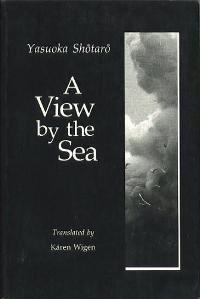
A View by the Sea, by Shotaro Yasuoka, is a powerful book in which the author displays unsparing introspection and acute awareness of human weakness. Emerging from a life of poverty, family troubles and illness in 1920s Japan, Shotaro uses his experiences to provide a careful examination of the postwar Japanese psyche. The young protagonist and his father travel to a mental institution where the boy's dying mother is being held. With the story's progression, the reader is taken deeper into the world of the asylum and the darkness of the family's past.
Satoshi Azuchi's Supermarket is a powerful novel about one man’s journey to find himself. Set in post WWII Tokyo, this story centers on the birth of the modern supermarket chain and its subsequent arrival in Japan. Kojima is an elite banker who quits his job to help his cousin manage a supermarket, but soon realizes it's not as easy as he expected. Store managers steal products, books are left in disarray, and the workers are stuck in old fashioned thinking. Amongst the disarray he spots a woman from his childhood who inspires him to ask himself, "Is all the time we put into trying to succeed in business really worth it?" This book takes the reader back to a simpler time in Japan, and gives insight into Japan's recovery process and industrialization following World War Two.
Lastly, I’d like to introduce Singular Rebellion by Saiichi Maruya. Set in 1969, the collective mentality of Japanese society is brought into focus. As students riot, poised to overthrow the entire system, this novel reminds us of our need as individuals to both conform and rebel. The Evening Asahi praised this work for supplanting the sentimental realism that had become a convention of Japanese literature, and lauded Maruya's complex portrayal of the many manifestations of the human experience.
These books are just a few of many that are available at the JIC library. Please read these wonderful books if you have the opportunity to do so.
-Brandon Carter
Did you know that the JIC Library has a “free books shelf” where you can take home retired books, magazines, and manga magazines for free? Take a look next time you visit!
What's New in the Library is a monthly feature by esteemed JIC librarian Bianca Jarvis. Stop by the JIC anytime to ask for book recommendations!
|
| |
|
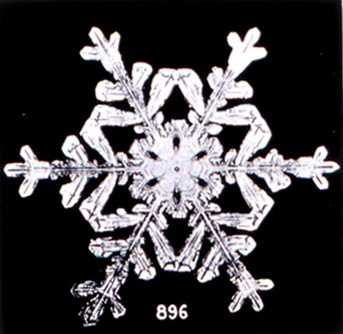
This month's haiku, by Danica Kristen Jayco of Murray Language Academy, takes a simple observation about the nature of snowflakes, and lets the meaning of that thought resonate far longer than the length of the poem. Which is exactly the point of a haiku.
The snow falls slowly.
Each different, yet the same
Just like us people.
|
| |
| |
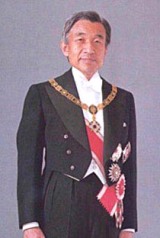
This coming December 23 marks a time of festivity and celebration in Japan for the Emperor's birthday, a national holiday, and one of only two occasions each year that the public is allowed into the Imperial grounds. There, crowds are greeted by the Imperial family, and can admire the pristine garden from up close. Typically, the Emperor also gives a brief address to the assembled throngs.
For more information on the Royal Family, please visit The Imperial Household Agency. |
| |

I'm going to assume that you're done with your JET applications at this point (or, at the very least, you've already asked for your teachers' recommendations. Right?), so all I need to do is remind you that they are due this Friday, December 2 at 5 PM EST. No later! They must be in the hands of the embassy by 5 PM! The postmark is irrelevant! So, if you haven't mailed it in yet, I strongly suggest you mail it express today!
Visit this page for the application and instructions on how to apply
Visit this page for more information on the JET Program |
| |
It is too late to register (and if we're being honest with ourselves, too late to start studying), but remember: the Japanese Language Proficiency Test is this coming Sunday, December 4. So if you registered in Atlanta, Chicago, Fayetteville, Honolulu, Los Angeles, New York, Seattle, San Francisco, Philadelphia, Boston, or Washington, D.C., don't forget to arrive on time and well-rested. Good luck!
|
| |
| Following are some of the upcoming events taking place in our 10-state jurisdiction. |
| |
Plumbed from the ample depths of the Art Institute of Chicago's considerable collection of ukiyo-e woodblock prints, this exhibit (which closes Sunday, December 11) highlights the work of one of the masters of the form: Torii Kiyonaga. Acknowledged for their shimmering colors and realistic human forms, Kiyonaga's prints are a window into Edo-era Japan, all the better when seen up close.
|
| |
Running through May 3, this show at the Art Institute is one of those occasions where it is very tempting to touch the art (do not touch the art). Gathering together musical instruments from the Heian Period (794 AD) through the end of the Edo period (1868), the exhibit presents the breadth of Japanese music history in a tantalizingly close environment (do not touch the art).
|
| |
The Japan America Society of Minnesota will be holding their annual bonenkai on December 15. Come for a chance to have good food and drinks with friends, and say goodbye to 2011! Space is limited, so call ahead for reservations!
|
| |
The Japan America Society of Chicago's 25th Annual Holiday Fundraiser and Bonenkai promises to be a real treat this year, featuring as it does Nobel laureate Dr. Ei-ichi Negishi. Dr. Negishi will speak on the promises his branch of chemistry has for the betterment of humanity in the future, all against the Rococo backdrop of Chicago's lush Union League Club. The accompanying dinner is sure to be delicious, too! Go to the below website for registration information. Corporate RSVPs are requested before December 1, while individual reservations are due on December 12.
|
| |
The Midwest Clinic is an epic musical symposium and convention held every year in Chicago's McCormick Place which, if you didn't know, is the largest convention center in the United States. But in spite of its size, McCormick Place will be struggling to contain all of the musical talent inside of it the weekend of December 14-17. The mission and goals of the Clinic are a little too broad to be fully summarized here (check the website below!), but I will note that there are 3 performances relevant to our readers!
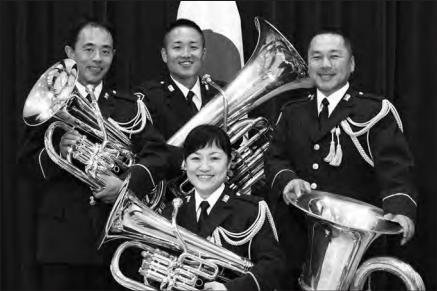
On Thursday, December 15 at 1:00 PM, the The Japan Tubists of the Japan Ground Self-Defense Force Central Band will be playing a brass program, including works by Gustav Holst and Itaru Sakai. Then, on Friday, December 16 at 5:30 PM, the L.V. Berkner High School Symphonic Band of Richardson Texas will be playing a long and wonderfully eccentric program, which includes the premier of the piece Anima Luminis by Wataru Hokoyama, composed in honor of the victims of last spring's earthquake and tsunami. Finally, on Saturday, December 17 at 11:30 AM, the Kunitachi College of Music Blasorchester, a brass ensemble from Tokyo, will be playing a wonderful program of brass selections old and new. All performances are at the convention center; registration and ticketing information can be found at the website below.
|
| |
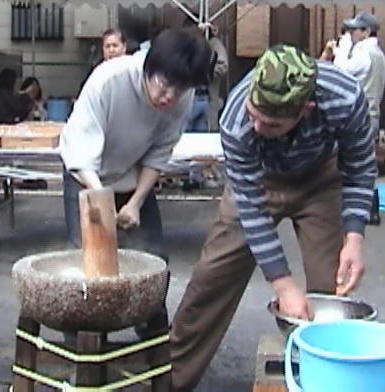
Each winter, the Midwest Buddhist Temple in Chicago invites the local community to witness the creation of mochi, or sweet rice cakes, on their grounds. A staple of New Year's feasts, the sticky rice paste in a mochi cake is made by pounding it repeatedly with a heavy mallet. I will say without hesitation that it is absolutely one of the best things in the world for a pre-adolescent child to watch. Plus, afterwards the temple will be selling the freshly made mochi, which are delicious. Be sure to arrive before 11:00 AM; it's been known to get crowded!
|
| |
Like many of co-director and Chicagoan Tatsu Aoki's projects, Taiko Legacy 7 is a skillful braiding of disparate musical threads drawn from the traditional music of many different countries. Featuring performers from across the United States, including Edward Wilkerson and Coco Elysses-Hevia, it's a musical melange that has earned its place as a semi-tradition at the Museum of Contemporary Art.
Saturday, December 17, 7:30 PM
Sunday, December 18, 3:00 PM |
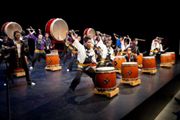 Taiko Legacy. Photo: Ken Carl.
 |
Museum of Contemporary Art Chicago
220 East Chicago Avenue
Chicago, IL 60611
(Map & Directions) |
Admission: $15, $12 for museum members
Taiko Legacy 8 at the MCA |
|
| |
For the month of December, Navy Pier will be the center of Chicago's holiday and seasonal festivities as it once again hosts the Winter WonderFest. As in years past, many of Chicago's foreign consulates will be sponsoring activities and decorating trees that are displayed throughout the pier. And the Consulate General of Japan at Chicago is no exception: a Japanese-themed Christmas tree will be on display through Sunday, January 2.
Moreover, on Sunday, December 3, St. Matthew's Japanese Preschool and Chicago Okinawa Kenjinkai will be entertaining audiences in the early evening with a program of music and dance.
|
| |
Monthly Economic Report (November, 2011)
http://www5.cao.go.jp/keizai3/getsurei-e/2011nov.html |
| |
Japan-U.S. Summit Meeting (Summary)
http://www.mofa.go.jp/region/n-america/us/meeting1111.html
Media Availability by Minister for Foreign Affairs Koichiro Gemba 16 Nov 2011 – Including U.S. Forces' Rotating Deployment and Expansion of Training in Australia
http://www.mofa.go.jp/announce/fm_press/2011/11/1116_01.html
APEC 2011 in Honolulu
http://www.mofa.go.jp/policy/economy/apec/2011/index.html
Press Conference by the Deputy Press Secretary, 10 November 2011 – Including Question concerning Foreign Minister Gemba's Approach to the Okinawa Issue with the United States
http://www.mofa.go.jp/announce/press/2011/11/1110_01.html
Courtesy Call on Prime Minister Noda by Co-chair Bill Gates
http://www.mofa.go.jp/policy/health_c/meeting1111.html
Press Conference by Minister for Foreign Affairs Koichiro Gemba – Including Realignment of U.S. Forces in Japan
http://www.mofa.go.jp/announce/fm_press/2011/11/1104_01.html
Meeting between Minister for Foreign Affairs Koichiro Gemba and U.S. Secretary of Defense Leon E. Panetta (Summary)
http://www.mofa.go.jp/region/n-america/us/meeting111025.html
|
| |
Here are three new questions about current events in Japan. The first person to answer the most correctly will receive a bit of Consular merchandise.
-
What delicious foodstuff has Yoda on television taken to hocking has he?
- What tireless profession had a 50 meter race in Yokohama this November?
- Who scored the opening goal in the recent Japan-Bahrain soccer match?
To submit your answers by email, click here: jic@japancc.org and write "Japan News Quiz" in the subject line.
Answers from the November Quiz:
The man who needs no introduction, Mr. Larry Smith hit a grand slam with last month's questions. All correct!
-
What mystery was discovered in the deeps off the Nagasaki coast? Kublai Khan Lost Fleet.
- Congratulations are due to Aya Miyama and Homare Sawa! But for what? Both were nominated for FIFA Women's World Player of the Year award.
- Why did Saiichi Maruya receive his nation's Order of Culture award? For developing blue LED technology (but some of his book deserved it also!)
|
| |
Each month, we use this space to highlight one example of our free Culture Presentation program. If you'd like to visit our offices, or have us come to your school, community center, business, or other location, please visit this page to learn more! Today's report was written by interpid intern Brandon Carter!
On October 21st students from Andrew Jackson Elementary school stopped by the JIC to gain insight into Japan and its culture. Upon their arrival, the JIC provided them with an in-depth description of the Japanese experience, including presentations on kendo (Japanese fencing) and tea ceremonies.
The first item presented was a slideshow that served as a cultural introduction welcoming Andrew Jackson Elementary on behalf of Japan. Slideshow topics discussed the food, language, and traditions of the Japanese people. After the slideshow, a brief demonstration on kendo was provided. Once used as a training method for the samurai, the excitement inherent in kendo captivated many of the students. The demo included a bamboo sword and suit of lacquer armor, to the delight of the children. To make the experience even more memorable, visiting students were allowed to try on the practice equipment and feel like professional kendo practitioners.
Next on the agenda was a presentation of the Japanese tea ceremony lead by another member of the JIC. The tea ceremony expresses the Japanese love of tea through the delicate process used to make it. The tea ceremony serves as a symbol of Japanese meticulousness and focus through the use of formalities. In the end each student was able to enjoy a cup of freshly brewed tea, which they prepared themselves.
Finally, Japanese clothing was worn by the students in a conclusion to the presentation. The opportunity to try on Japanese clothes provided the students with a chance to develop a traditional feel for Japan by jumping into the literal fabric of Japanese culture.
|
| |
 Onsen Japan Onsen Japan
This month, we will not be discussing studying and cramming, flashcards and practice tests. There are only a few more days until the Japanese Language Proficiency Test, and all the studying we've done up to this point will have to do. Instead, I come to you today with a very helpful website for the months after you take the test, and before you get the results: Onsen Japan.
Onsen Japan is the perfect place to plan your relaxing, hot-springs-defined post-test vacation. Or, if you aren't planning on travelling to Japan in the next few months, you can just look at all of the picturesque spas this page exhaustively catalogues, and you can imagine yourself relaxing, which is its own vacation in a way, isn't it?
All kidding aside, Onsen Japan provides a great introduction to an onsen tour. There's a list of basic onsen ettiquette, a glossary of hot-springs words, a fascinating look at the origins of the natural onsen in Japan, and, of course, page after page of reviews, covering spas and springs across Japan. |
| |
No salutations this month!
Why? Because there is no time to be wasted on frippery and greetings. We must all put aside these fleeting politenesses, for the Japanese Language Proficiency Test lurks right around the corner. This is the last week we have to cram and study! Put down your Gameboy (unless it is a study-equipped Gameboy) and pick up your Japanese dictionary! Best of luck to all of you, and I'll see you in the New Year!
Daniel Drake, Editor |
| |
| You are receiving this email webletter because you have signed up to receive information about Japan and Japan-related events from our office. If you no longer wish to receive these emails, please click the link below. |
|
|
|
|

 Like the Consulate on Facebook!
 Shiwasu, the old Japanese name for the month of December, means “priests run around.” It is so called because the priests (along with everyone else) are so busy this month preparing for the end of the year and the New Year festivities.
  Editor's Note: Once again, this month, JIC intern Brandon Carter has studied the literature available in the JIC library, and has some recommendations for you.